
The ‘Ber Months Are Here: Christmas Season Starts at iFOVS
September 1 means one thing in the Philippines: the ‘ber months have started, and so, unofficially but unmistakably, has Christmas. Radio stations reach for the carols,…
Read articleInsights

September is World Alzheimer’s Month, and 21 September is World Alzheimer’s Day — a date Alzheimer’s Disease International has marked every year since 1994. More than 55 million people are living with dementia worldwide, and close to 10 million new cases are diagnosed every year. Those are the numbers. The reality behind them is quieter: a diagnosis, and then a very long list of appointments, forms and phone calls that someone now has to manage.
We are not clinicians, and we would never claim otherwise. But a good part of what our team does every day, for healthcare practices across the United States, the United Kingdom, Canada and Australia, is exactly that list — the non-clinical work that keeps a patient’s care moving. This felt like the right month to say plainly what that work has to do with dementia and Alzheimer’s care, because it has more to do with it than people assume.
A dementia diagnosis rarely arrives with one appointment. It arrives with a neurologist referral, a string of cognitive assessments, prior authorisations for medication, insurance eligibility checks before every visit, a recall list so follow-ups don’t get missed, and a caregiver on the other end of the phone trying to keep track of all of it while also, usually, holding down a job and a household. None of that is clinical work. All of it is exactly the kind of work that decides whether a practice runs on time, and whether a family gets a callback the same day or three days later.
This is the work our healthcare support teams place with medical, dental, therapy and allied health practices: insurance verification, prior authorisation submission and follow-up, claim status chasing, recall and reactivation lists, records requests, and patient communication that routes anything clinical straight back to the practice’s own staff. We do not assess, advise or interpret anything clinical — that boundary is absolute. What we take on is the paperwork that expands to fill whoever is nearest to it, so the people qualified to treat a patient are not the ones stuck verifying their insurance.
Every one of those tasks gets harder, not easier, when the patient is elderly and the diagnosis is memory loss. A recall list matters more, because a missed follow-up for a dementia patient isn’t just a scheduling gap — it can mean a missed medication review. Insurance verification matters more, because a family managing a new diagnosis is already stretched, and a denied claim they have to fight themselves is one more thing on a list that is already too long. A practice with a properly staffed back office can absorb that load and keep showing up for the family. A practice without one passes the load straight to whoever is already exhausted — usually the caregiver.
We built our healthcare support teams around that gap generally, not around Alzheimer’s specifically. This is simply the month we are pointing at it directly, because dementia and Alzheimer’s care are some of the clearest examples we have of what non-clinical support is actually for.
Our team works out of Ipil, Zamboanga Sibugay, on hours built around the clients we support in the US, UK, Canada and Australia. Many of the same people staffing those insurance-verification queues and recall lists have grandparents, parents or neighbours managing memory loss of their own — caregiving is not a foreign concept here, and it shapes how our people approach the work. A positive, can-do attitude and results over excuses are two of our core values for a reason: this kind of work rewards people who don’t get frustrated on the fortieth insurance call of the day, and who treat a family’s waiting on an answer as something to solve, not explain away.
If your front desk is the one absorbing the recall lists, the prior authorisations and the insurance calls for patients and families managing memory loss, that is precisely the load our healthcare support teams are built to take on — NDA signed before any system access, named logins into your own practice management system, and a Business Associate Agreement where one is needed. And if you are simply reading this as someone with a parent, spouse or friend navigating a new diagnosis this month: check in on the person doing the caregiving, not only the person who was diagnosed. They are usually the one who needs it.
World Alzheimer’s Day is 21 September. However you mark it — wearing purple, sharing a resource from Alzheimer’s Disease International, or calling someone you’ve been meaning to check on — we’ll be here doing the quieter part of the work, the way we do the rest of the year.
Keep reading

September 1 means one thing in the Philippines: the ‘ber months have started, and so, unofficially but unmistakably, has Christmas. Radio stations reach for the carols,…
Read article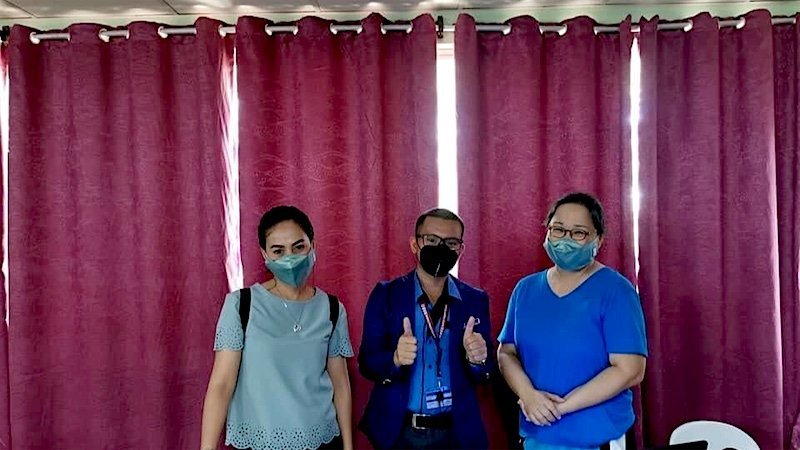
A 2021 record of the iFOVS job caravan in Titay — part of how we recruit and train the people behind our client accounts.
Read articleLet's talk
Tell us what's taking up your time. We'll show you exactly how a trained iFOVS team can take it off your plate — and what it costs.
Leave a Reply