
Why offshore hires fail in month three
Almost nothing fails in week one. The failures cluster at month three, and by then the cause is months old.
Read articleInsights
· Guides
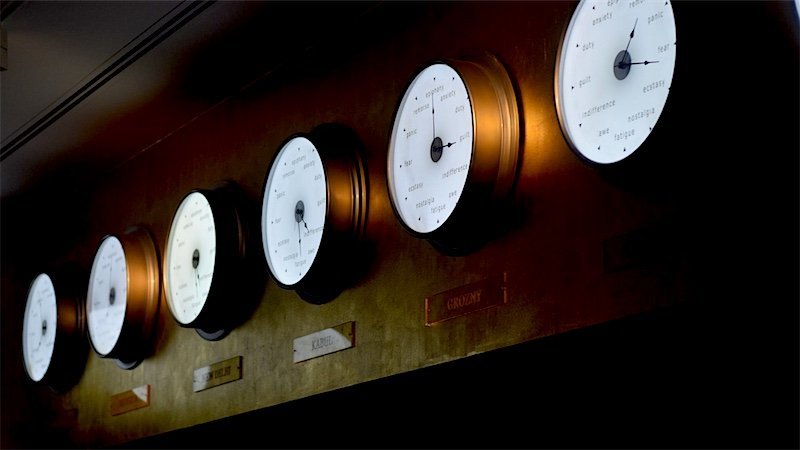
When businesses hesitate about offshore support, the time difference is almost always the stated reason. It is the wrong thing to worry about. Handled badly it is an irritation; handled well it is the single biggest advantage of the arrangement.
The goal is simple to state: you should finish your day by handing work over, and start the next one by reviewing what came back. Everything below exists to make that happen.
Almost every pairing has some overlap. Ours is deliberate: we work 11pm to 8am GMT+8, Monday to Saturday, which lands inside business hours across the USA, Canada, the UK, Australia and New Zealand.
Whatever your overlap is, treat it as the most valuable hour of the day. Do not spend it on status updates that could have been written down. Spend it on the things that genuinely need two people at once: unclear briefs, judgement calls, anything where a misunderstanding would waste a full day.
The end-of-shift handover is the mechanism that makes the whole thing work. It does not need to be long. Four lines is plenty:
The last line matters most. A blocked task discovered at the start of your day costs you an hour. The same task discovered at the start of theirs costs a full cycle.
The instinct is to save questions for the overlap. It is the wrong instinct — it delays everything and wastes the one window where real-time actually helps.
Better: questions get asked in writing the moment they arise, with enough context to be answered cold. “Should I proceed with X or Y? I have assumed X because of Z — say if that is wrong” can be answered in ten seconds, whenever you next look. “Quick question about the report” cannot be answered at all without a conversation.
Some things genuinely should not sit until the next overlap. Decide in advance what they are, and how to reach you: an angry customer, a payment failure, anything involving data or security, anything client-facing that is visibly wrong.
Everything else waits. Being explicit about the short list is what makes it safe to ignore the rest.
You will not see the work happen, and that discomfort pushes some managers towards monitoring software and hourly check-ins. Resist it. It produces people optimising for looking busy during observation, which is precisely the wrong behaviour and corrodes trust besides.
Agree what should be true by the end of the shift, then look at whether it is true. That is a better test than any activity log, and it is the only one that scales.
It always is. Context that lives in your head has to be transferred, and it transfers through questions. A high volume of questions in week one is a good sign, not a bad one — it means someone is trying to get it right rather than guessing.
Judge the arrangement at week six, not week one.
If you would like to talk through how the overlap would work for your hours specifically, get in touch.
Keep reading

Almost nothing fails in week one. The failures cluster at month three, and by then the cause is months old.
Read article
Most businesses ask for full overlap and need about two hours. The difference costs money and narrows who will stay.
Read articleLet's talk
Tell us what's taking up your time. We'll show you exactly how a trained iFOVS team can take it off your plate — and what it costs.